Tesla Slips Humanoid Robot Delivery to 2027, Citing Hand Design Flaws
The company's humanoid robot won't reach outside customers until late 2027, as engineers struggle to create hands that can handle delicate objects without wearing out.
By Isabella Morales ·
The future of factory labor just got a little further away. Tesla has officially pushed its target for delivering humanoid robots to outside customers to the end of 2027, a timeline that follows years of shifting promises.
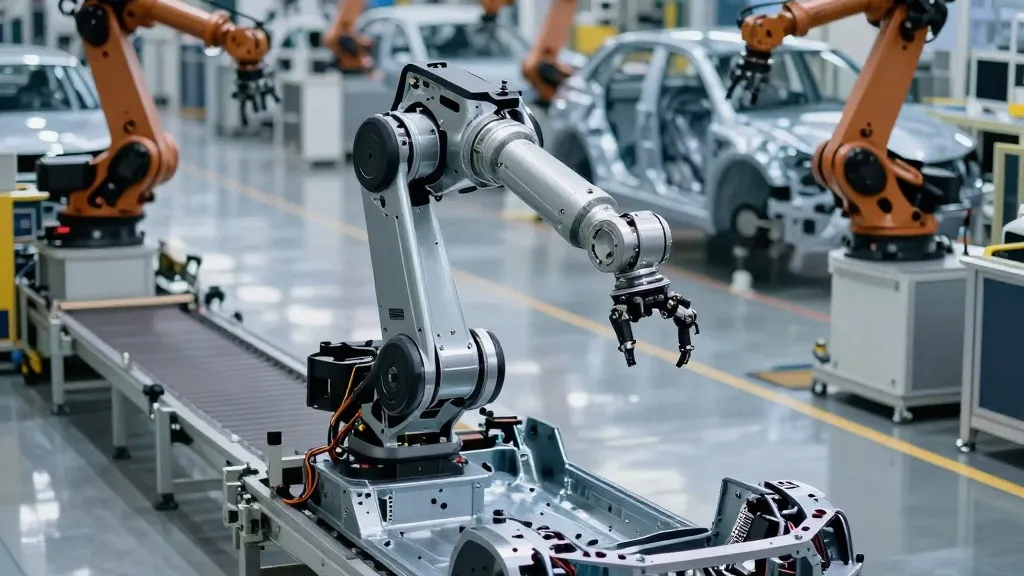
During the Q3 2026 earnings call, Elon Musk explained that the robot’s hands, durability, and artificial intelligence still require significant work. While early production has begun on the high-volume line in Fremont, California, the setup is designed for a massive scale that the team is not yet ready to hit. Musk noted that reaching a rate of 20,000 units per week will take at least a year because the design is still in flux. The immediate focus is on solving reliability issues so the machines don't break down after a month of use, with initial external sales planned for industrial roles that are dangerous or repetitive.
The hand remains the biggest hurdle. A Tesla engineer identified it as one of the hardest hardware areas, alongside custom gears. Musk agreed, noting that the fingers must be soft enough for delicate tasks but tough enough to withstand constant wear, a challenge made harder by the fact that robots cannot heal like human skin. On the software side, Tesla lacks the massive data fleet its cars provide. To compensate, the company plans to build 10,000 to 20,000 robots for an internal training program called the Optimus Academy, with new AI5 chips expected to be integrated by April 2027.
This isn't the first time these challenges have surfaced. Reports from last month highlighted that the hand and forearm contain over 100 small parts assembled by hand, and that the AI could take days to learn basic tasks. Tesla’s recent shareholder letter now describes the current output as the first "production-quality" bots, implying that previous units were not up to standard. The timeline has shifted repeatedly since 2024, when high-volume external sales were initially hoped for by 2026.
Musk claimed on the call that no one else is close to Tesla in general-purpose humanoid development. However, competitors are making steady progress. XPeng recently activated an automated production line in Guangzhou and aims for mass production by the end of 2026, with deliveries starting in the first half of 2027. Meanwhile, Boston Dynamics has started producing its electric Atlas robot and has committed all its 2026 deployments, including to Google DeepMind. Boston Dynamics has also opened a training center in Georgia to teach Atlas to sequence car parts, taking a pragmatic approach with sturdy grippers rather than complex human-like hands.
Musk promised a video within the next month or two showing the robot performing unscripted tasks to prove its capabilities. For now, the industry is waiting to see if the 2027 date will hold, given the history of delays and the persistent technical hurdles that remain unsolved.
Source: Electrek